Detailing has its own vocabulary, and so does running a detailing business. This glossary defines the terms used across our Charlotte detailing-business guides in plain English — bookmark it as a reference.
Detailing process & services
All-purpose cleaner (APC) — A dilutable, multi-surface cleaner used inside and out; a workhorse of any detailing kit.
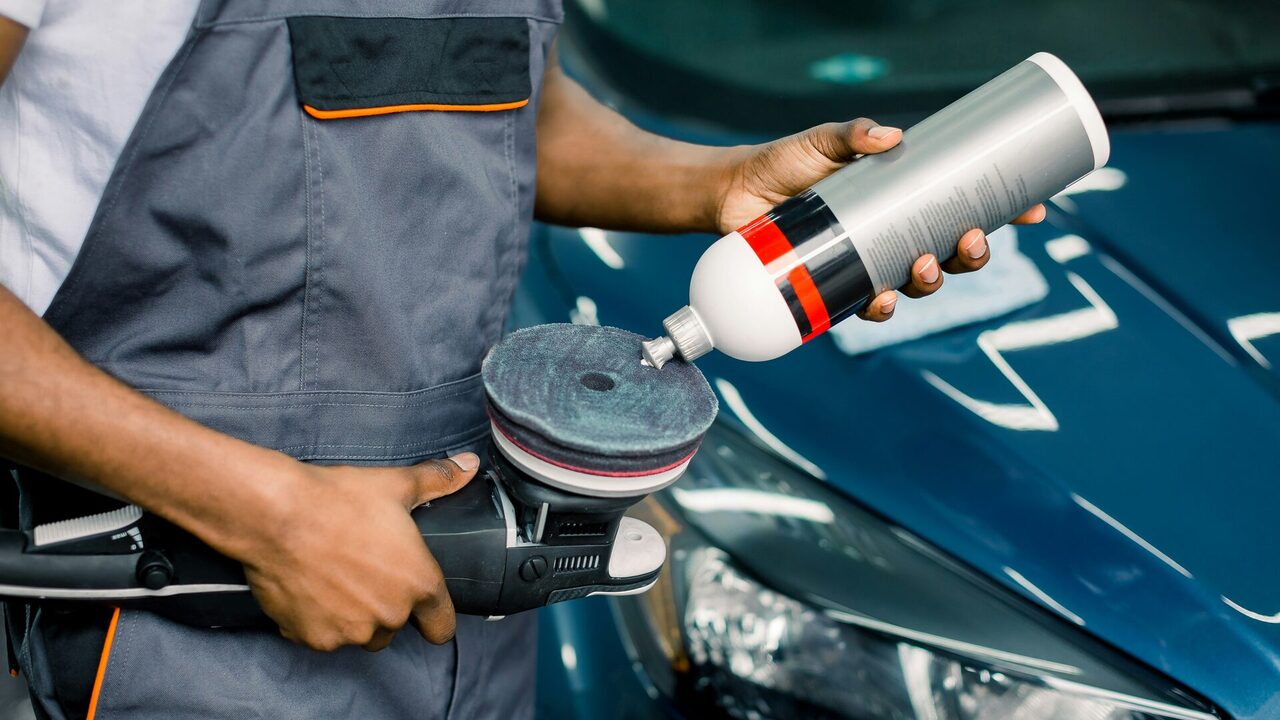
Buffing — Using a machine and pad to work polish or compound into paint to refine the finish.
Ceramic coating — A durable, semi-permanent liquid-polymer layer that bonds to paint, creating a hydrophobic, glossy, easier-to-clean surface that lasts years.
Clay bar / clay mitt — A tool that mechanically removes bonded contaminants (overspray, fallout, grit) from paint that washing can’t lift. Part of decontamination.
Compound — An abrasive polish that removes deeper defects from clear coat before finer polishing.
Decontamination — Removing bonded contaminants from paint chemically (iron remover) and mechanically (clay) before polishing or coating.
Dressing — A product that restores and protects trim, tires, and plastics with a matte-to-glossy finish.
Express detail — A faster, lighter service (often exterior wash plus a quick interior) priced below a full detail.
Full detail — The standard deep service: interior cleaning plus exterior wash, decontamination, and protection. Charlotte full details commonly run $175–$575.
Hydrophobic — “Water-fearing”; a surface treated so water beads and sheets off, carrying dirt with it.
Interior detail — A focused deep clean of the cabin: vacuuming, surfaces, upholstery or leather, glass, and odor work.
Iron remover — A chemical decontaminant that dissolves embedded iron particles (brake dust, rail dust) from paint and wheels.
Paint correction — Machine polishing that permanently removes swirls, light scratches, and oxidation. Single-stage to multi-stage; usually paired with a coating.
Paint protection film (PPF) — A clear, self-healing urethane film applied over paint to protect against rock chips and scratches.
pH-neutral shampoo — A wash soap balanced so it cleans without stripping wax, sealant, or coating.
Polish — A mild abrasive that refines paint and boosts gloss after compounding.
Protectant — A product that shields interior or exterior surfaces from UV and wear.
Rinseless wash — A method using a product that encapsulates dirt so a car is cleaned with minimal water and no separate rinse. Low runoff — useful for storm-water compliance.
Sealant — A synthetic paint protection lasting months, longer than natural wax, shorter than a ceramic coating.
Swirl marks — Fine circular scratches in clear coat, usually from improper washing; removed by paint correction.
Two-bucket method — Washing with separate wash and rinse buckets to avoid dragging grit back onto paint.
Waterless wash — A spray-and-wipe product that cleans lightly soiled vehicles with no rinse and almost no runoff.
Wax — A natural (often carnauba) protectant giving warm gloss and water beading for weeks.
Equipment & rig
Dual-action (DA) polisher — A beginner-friendly machine that oscillates and rotates, reducing the risk of burning paint while correcting it.
Extractor — A machine that injects and vacuums solution out of carpets and upholstery for deep interior cleaning.
Grit guard — A grate in the bottom of a wash bucket that traps dirt below the wash mitt.
Reclaim system — Mats, berms, and a recovery vacuum that capture wash water so it doesn’t enter a storm drain — required to wash compliantly in Charlotte-Mecklenburg.
Water tank — The onboard water supply on a mobile rig, commonly 50–100 gallons.
Business, legal & money
Care, custody & control (CCC) — Liability for a customer’s property while in your possession; covered by garagekeepers insurance, not standard auto liability.
Commercial auto insurance — Coverage for a vehicle used for business; a personal auto policy generally won’t cover work use.
EIN (Employer Identification Number) — A free federal tax ID for your business from the IRS.
Garagekeepers insurance — Coverage for damage to customers’ vehicles in your care; the policy detailers most often overlook.
General liability insurance — Covers third-party injury or property damage arising from your work.
Illicit discharge — Releasing anything but clean stormwater into the storm-drain system; soapy wash water to a storm drain violates Charlotte Code Chapter 18.
LLC (Limited Liability Company) — A common business structure that separates personal and business liability; formed via the NC Secretary of State.
RMI (Repair, Maintenance & Installation) service — The NC tax category that makes detailing taxable as a service since 2017.
Sales & Use Tax Certificate of Registration — The free NCDOR registration that lets you legally collect and remit sales tax.
Service-area business (SAB) — A business that serves customers at their location rather than a storefront; the Google Business Profile type for mobile detailers.
Storm Water Services — The joint Charlotte-Mecklenburg city/county utility that enforces stormwater rules across Charlotte and surrounding towns.
This is the reference chapter of the complete Charlotte detailing-business guide.