Most “how to start a detailing business” articles tell you to “get your business license.” In North Carolina, that advice is wrong — there isn’t a general one to get. What you actually need is a business entity, a federal tax ID, a state sales-tax registration, the right insurance, and a wash method that doesn’t violate Mecklenburg County’s storm-water rules. Here’s the real checklist for Charlotte.
Do you need a business license to detail cars in North Carolina?
No general state business license exists in North Carolina. The state repealed its professional privilege license tax effective July 1, 2024, and the General Assembly eliminated most local privilege license taxes back in 2015 (NCDOR — Privilege License Tax). For a mobile detailer, there’s no statewide “detailing license” and, in most of Mecklenburg County, no local business license to buy either.
That doesn’t mean there’s nothing to do. It means the work is registration, not licensing. Here’s the difference.
What you actually need to be legal
| Step | What it is | Where | Cost |
|---|---|---|---|
| 1. Form your entity | LLC (most common) or sole proprietorship | NC Secretary of State | State filing fee |
| 2. Get an EIN | Federal tax ID for the business | IRS (free, online) | $0 |
| 3. Register for sales tax | Sales & Use Tax Certificate of Registration | NC Department of Revenue | $0 |
| 4. Insurance | Liability + commercial auto, at minimum | Private insurer | Quote-based |
| 5. Home-occupation permit | Zoning Use Permit if you base the business at home | City of Charlotte (or your town) | Varies |
Forming an LLC through the NC Secretary of State gives you liability separation and a clean business identity. The EIN is free from the IRS and takes minutes. Sales-tax registration with NCDOR is also free — you get an account number instantly online and the certificate is typically processed within about 10 business days (NCDOR — Sales and Use Tax Registration).
Yes, detailing is taxable in North Carolina
This is the part most out-of-state guides miss. Since January 1, 2017, North Carolina taxes car washing and detailing as a “repair, maintenance, and installation” (RMI) service on a motor vehicle (NCDOR — RMI Services). You collect sales tax on your detailing packages and remit it to the state.
In Mecklenburg County the combined rate is 7.25%, and it rises to 8.25% on July 1, 2026 because of the voter-approved transit sales tax (NCDOR — Mecklenburg County rate increase). Two nuances worth knowing:
- Self-service washing is exempt — but mobile detailing is a full service, so it’s taxable.
- Standalone interior carpet and upholstery shampooing can be non-taxable if you offer and bill it separately from otherwise-taxable washing or detailing. Bundle it into a detail package and the whole package is taxable.
For exactly how to put this on a customer’s invoice, see how to price detailing services in Charlotte.
The storm-water rule that can get you fined
Here’s the local rule almost no national guide mentions, and it names your business specifically. Under the Charlotte Stormwater Pollution Control Ordinance — City Code Chapter 18, Article III — it is illegal to discharge anything but stormwater to the storm-drain system. Section 18-80 prohibits causing or allowing any pollutant to reach the stormwater system “either directly or indirectly… or upon the land in a manner or amount that is likely to reach” it. And the ordinance’s definition of an illicit discharge (Sec. 18-77) explicitly lists “commercial vehicle Washwater” and “soaps/detergents” as examples (City of Charlotte — Stormwater Pollution Control Ordinance, Ord. No. 9802). Storm drains here don’t go to a treatment plant — they empty straight into local creeks.
The exceptions in Sec. 18-81 cover single-family residential and charity car washing — not commercial detailing. In other words, a homeowner rinsing their own car is fine; your business’s wash water is not. The teeth: civil penalties of up to $10,000 per day, with each day a separate violation (Sec. 18-83). The City of Charlotte ordinance applies within city limits, and Charlotte-Mecklenburg Storm Water Services — a joint city/county utility covering Cornelius, Davidson, Huntersville, Matthews, Mint Hill, Pineville, and unincorporated Mecklenburg County — administers equivalent rules across the rest of the county.
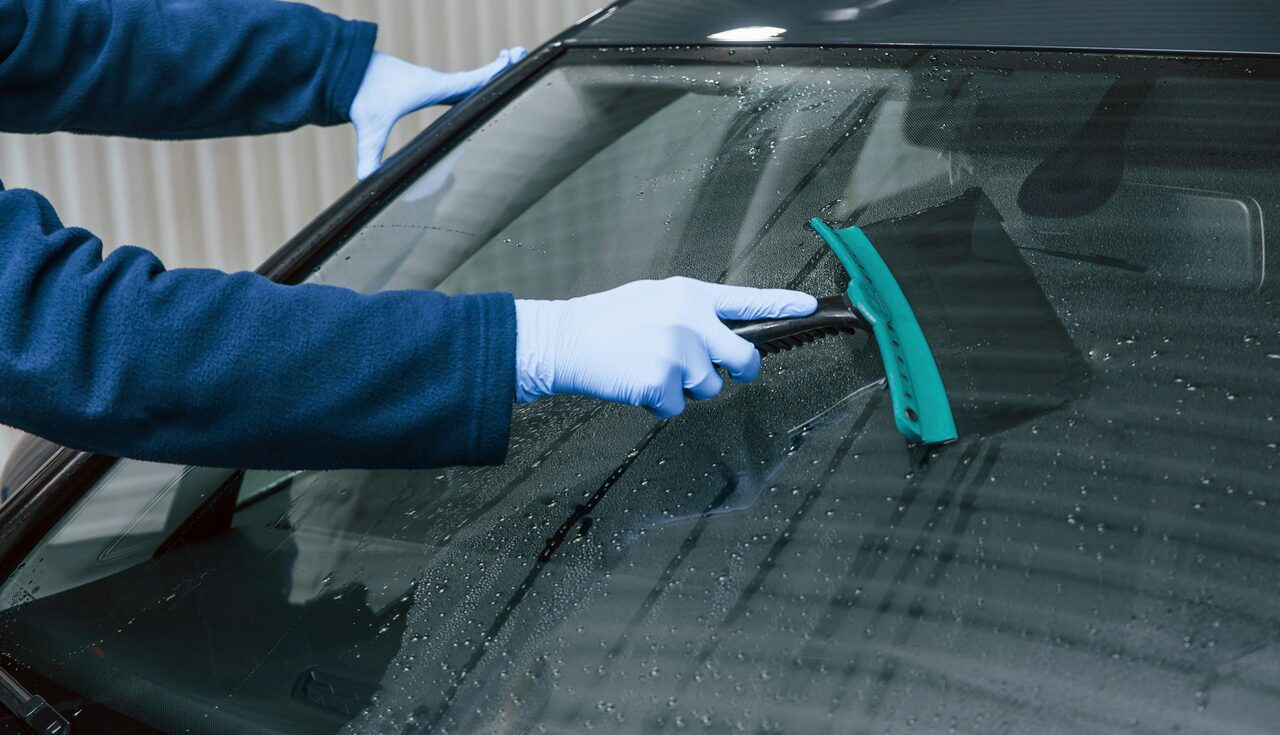
So compliant mobile detailers either capture and reclaim wash water (mats, berms, and a vacuum-recovery setup) or use rinseless and waterless products that generate little to no runoff. This isn’t just compliance — it’s a selling point. “Fully storm-water compliant” is something you can put on your site that most competitors can’t. Your water and runoff setup is covered in detail in the water, power & equipment guide.
Working from home: the Charlotte zoning permit
If you’ll base the business out of your house — even though the detailing itself happens at the customer’s location — Charlotte requires a Zoning Use Permit for a home occupation (City of Charlotte — Home-Based Businesses). The home-occupation rules that matter most to a mobile detailer:
- The business must stay incidental to the residence and not change its residential character.
- No vehicle repair or service may be performed at the home (detailing done off-site at customers’ locations is fine; running a detailing bay at your house is not).
- Only residents of the home may work there — employees can’t come to your house to pick up materials, vehicles, or assignments.
- No storage of tractor-trailers, semi-trucks, or heavy commercial equipment; keep any wrapped van/trailer from altering the neighborhood’s character.
- Client or business visits are by appointment only, 7 a.m.–8 p.m., and signage must follow UDO Section 22.6.B.
Confirm the current rules with the Charlotte Development Center (704-336-6692) for your specific address, since towns within the county set their own.
Insurance: what a mobile detailer should carry
Insurance isn’t a government license, but it’s not optional in practice — many HOAs, dealerships, and fleet clients won’t let you on-site without proof of coverage. The common policies for a mobile detailer are:
- General liability — covers third-party injury or property damage while you work.
- Commercial auto — your personal auto policy generally won’t cover a vehicle used for business; you need a commercial policy on the work vehicle.
- Garagekeepers / care, custody & control — covers damage to a customer’s vehicle while it’s in your care. Standard auto liability typically excludes this, and it’s the coverage detailers most often discover they’re missing.
Get quotes from an agent who writes commercial policies for auto-service businesses, and ask specifically about care-custody-and-control. Budget for insurance in your startup cost plan.
The bottom line
To run a legal mobile detailing business in Charlotte you don’t need a special license — you need to register the business, register for sales tax, carry the right insurance, and wash cars without sending water into a storm drain. Do those four things and you’re operating cleanly ahead of a surprising number of competitors who aren’t.
This is one chapter of the complete Charlotte detailing-business guide. Next, most people read how much it costs to start.