If the black trim around your Tesla Model Y or Model 3 windows has a rainbow, “oil slick” sheen — you’re not alone, and your trim isn’t ruined. It’s one of the most common complaints in Tesla owner forums, and the fix takes about ten minutes once you understand what’s actually happening.
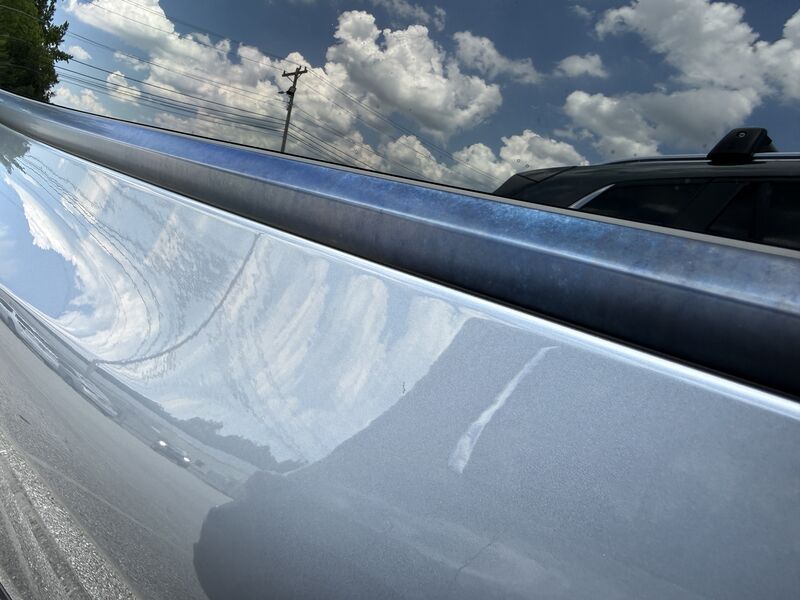
The good news: this isn’t paint damage or oxidation eating your trim. It’s a chemical film sitting on top of it. And while Teslas are the poster child for this problem, the same thing happens to anodized aluminum trim on BMW, Audi, Alfa Romeo, and plenty of other brands. Everything below works on all of them.
What Causes the Rainbow “Oil Slick” on Black Trim?
Tesla’s black window and door trim is anodized aluminum, not plastic. Anodizing leaves microscopic pores in the metal’s surface — and those pores react badly to high-pH (alkaline) chemicals.
The usual suspects:
- Touchless car washes. With no brushes to scrub, they compensate with highly alkaline soaps strong enough to dissolve road grime on contact. That same chemistry etches a film onto anodized trim — especially when the trim is hot and the soap “cooks” on in the sun.
- Automatic car wash detergents. Same problem, slightly milder.
- Water-repellent glass coatings like Rain-X. Overspray onto the trim leaves a residue that refracts light into that rainbow pattern.
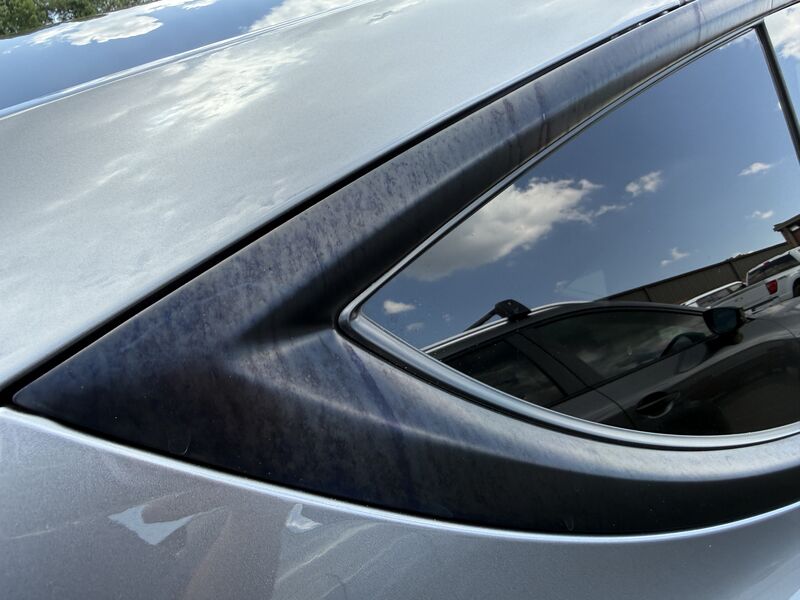
The thin chemical layer left behind refracts light exactly like oil on a puddle — hence the rainbow. Tesla’s own owner’s manual warns against alkaline and caustic wash chemicals for this reason, and mobile service techs have told owners this staining isn’t covered under warranty because it’s chemical damage, not a defect.
Why WD-40 Only Works for a Week
Search any Tesla forum and the first answer you’ll see is WD-40. It does work — temporarily. Because WD-40 is a light oil, it fills those microscopic pores in the anodized surface and hides the refraction. But it doesn’t remove anything. The next rain or wash flushes it out, and the rainbow comes right back.
To fix it properly, you need to do two things: strip the chemical residue, then seal the trim so it can’t come back.
Step 1: Strip the Residue — Chemical Guys Trim Clean
Chemical Guys Trim Clean Wax & Oil Remover is designed to dissolve exactly this kind of baked-on film — wax, sealant, soap residue, and glass-coating overspray.
- Spray it onto a quality microfiber towel — not directly onto the car — to avoid overspray onto paint and glass.
- Agitate the trim with firm, linear (back-and-forth) pressure. Work one section at a time.
- Buff dry with a clean section of the towel.
You should see the rainbow film lift off within a pass or two. Stubborn spots may need a second application.
Step 2: Seal It So It Doesn’t Come Back
Stripped trim is bare trim — if you stop here, the next touchless wash puts the rainbow right back. Pick your protection level:
For 3–4 weeks of protection: Apply a thin layer of Chemical Guys VRP (Vinyl, Rubber, Plastic protectant) with a microfiber applicator pad, then buff off the excess. Quick, cheap, and it restores a uniform satin-black look. (Wondering about sling, dilution, or how it stacks up against 303? See our full VRP review.)
For months of protection: Use a ceramic-based trim sealant like Chemical Guys HydroShield. The SiO2 formula cures into the pores of the anodized surface, physically blocking high-pH soaps from reaching the metal. This is the closest thing to a permanent fix short of having a pro coat the trim — and if you’re already considering full-vehicle protection, see our guide on whether ceramic coating is worth it in Charlotte.
The “Kitchen Mirror” Trick: Stainless Steel Wipes
Want an immediate fix tonight without ordering anything? Thousands of Tesla owners use stainless steel appliance wipes (Weiman is the common brand) or Tub O’ Towels.
It sounds odd, but anodized aluminum trim behaves a lot like a stainless steel refrigerator door. Wipe the trim firmly with an appliance wipe and the rainbow film comes off almost instantly. Just follow up with a clean, dry microfiber towel so the residue doesn’t attract dust.
Treat this as a stopgap — it removes the film but leaves the trim unsealed, so the problem will return after the next wash.
How to Keep It From Coming Back
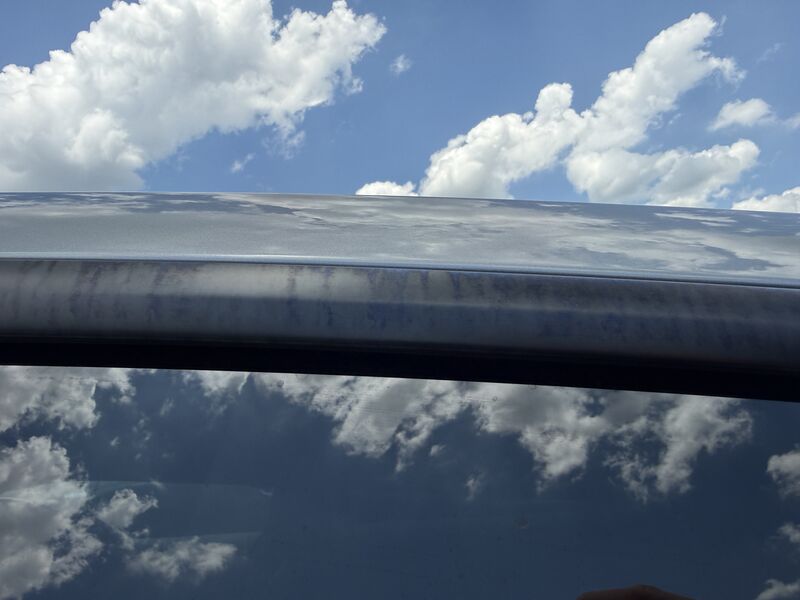
- Skip commercial touchless and automatic washes when you can. Their high-alkaline soap is the single biggest trigger. Hand washing with a pH-neutral shampoo — or having a mobile detailer come to your driveway — avoids the problem entirely.
- If you must use a touchless wash, towel-dry the window and door trim completely as soon as you exit, before the residue can bake on in the sun.
- Keep the trim sealed. Reapply VRP monthly, or a ceramic trim sealant a couple of times a year.
- Wash on a schedule so contamination never sits long — here’s how often you should detail your car in Charlotte’s climate.
FAQ
Is the rainbow discoloration permanent damage? Usually not. In most cases it’s a surface film that strips off with a dedicated trim cleaner. However, some early Model Y/Model 3 batches had thin or defective anodizing — if the discoloration won’t strip off no matter what, ask Tesla service about trim replacement; some owners have had it replaced free.
Does this only happen to Teslas? No. Any vehicle with anodized aluminum window trim can develop it — BMW Shadowline trim, Audi brightwork, and Alfa Romeo trim all have the same complaint threads. Teslas just have a lot of exposed anodized trim and a lot of owners using touchless washes.
Will vinegar or alcohol fix it? Acidic and harsh solvent cleaners can damage anodized finishes just like alkaline ones. Stick to purpose-made trim cleaners or the stainless-wipe trick.
Should I just have a pro handle it? If your trim is heavily stained or you want the whole car protected at once, a professional detail is the efficient route. Get free quotes from vetted Charlotte detailers here — takes about 30 seconds.
This post contains affiliate links — see our affiliate disclosure. We only recommend products detailers actually use.